



Screens are a part of everyday life. Whether you’re working on a computer, scrolling on your phone, or relaxing with a show at the end of the day, it’s hard to avoid screen time completely. You might be wondering if all that screen use is actually harming your eyes.
While screens typically don’t cause permanent eye damage, too much screen time can still affect your eye comfort and vision. Long hours spent looking at digital devices can lead to eye strain, headaches, dry eyes, and trouble focusing.
Here’s what to know about how screens affect your eyes and what you can do to reduce discomfort.
What Is Digital Eye Strain?
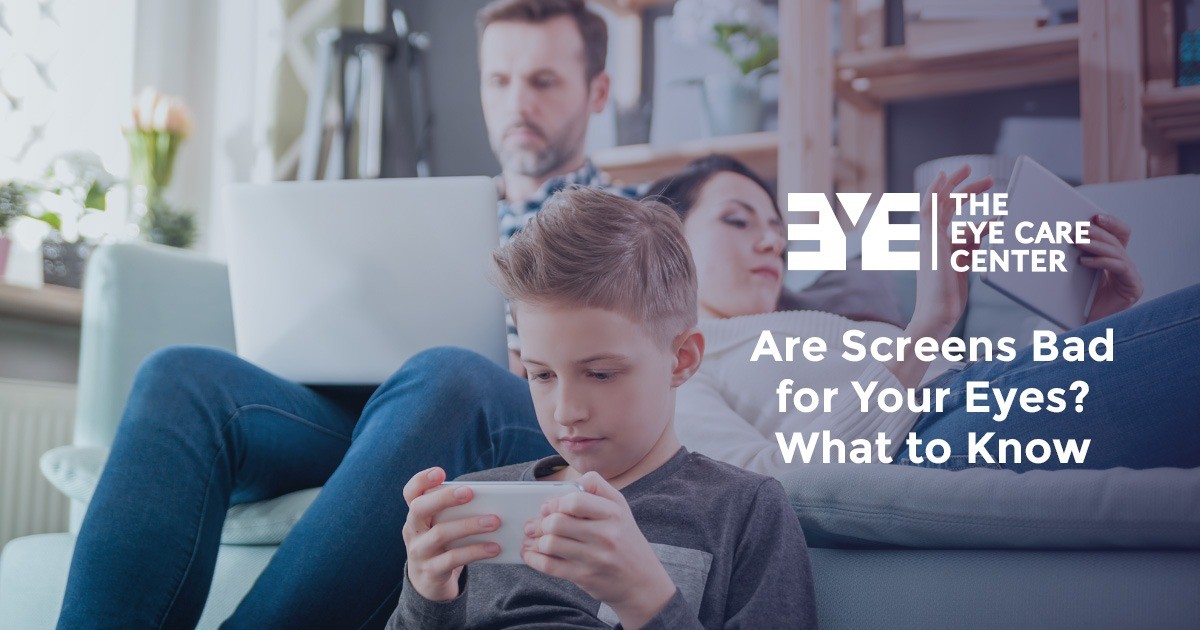
Digital eye strain, sometimes called computer vision syndrome, is a group of eye and vision problems caused by spending long periods of time looking at digital screens. This can happen when using computers, smartphones, tablets, TVs, or other digital devices for work, school, or entertainment.
What Are the Signs of Digital Eye Strain?
Staring at screens for long periods can make your eyes work harder to stay focused. Screen glare, poor lighting, reduced blinking, and sitting too close to a device can all contribute to discomfort. Common symptoms of digital eye strain include:
- Dry or irritated eyes
- Blurry vision
- Headaches
- Eye fatigue
- Neck and shoulder pain
Do Computer Screens Damage Your Eyes?
Computer screens and digital devices usually don’t cause permanent damage to your eyes, but too much screen time can still affect your comfort and focus. Spending long hours on screens may lead to dry eyes, temporary blurry vision, headaches, and trouble concentrating, especially during work or late at night.
Children and teens may be more sensitive to heavy screen use because their eyes are still developing. Many eye doctors recommend following the 20-20-20 rule, which means looking at something 20 feet away for at least 20 seconds every 20 minutes.
Is Blue Light Bad for Your Eyes?
Blue light is a natural part of visible light and comes from both the sun and digital devices like phones, tablets, and computers. During the day, blue light helps support alertness and normal sleep patterns. Current research has not shown that everyday blue light exposure from screens permanently damages your eyes.
However, blue light may still contribute to eye strain and can make it harder to fall asleep if you use screens late at night. Some people choose blue light eye glasses for added comfort, but reducing glare and limiting screen time before bed can also help.
Tips for Protecting Your Eyes From Screen Time
If you spend a lot of time on digital devices, a few simple habits can help reduce eye strain and improve comfort throughout the day:
- Follow the 20-20-20 rule
- Adjust screen brightness to a comfortable level
- Reduce glare from windows or overhead lights
- Blink more often to help prevent dry eyes
- Take regular breaks from screens when possible
- Avoid screen time right before bed
If you regularly experience headaches, blurry vision, or eye discomfort, scheduling a comprehensive eye exam can help identify the cause and recommend the right solutions for your needs.
When to Schedule an Eye Exam for Screen-Related Eye Strain
Screens are a normal part of modern life, but too much screen time can still leave your eyes feeling tired, dry, and uncomfortable. While digital devices typically don’t cause permanent eye damage, it’s important to pay attention to ongoing symptoms like headaches, blurry vision, or trouble focusing.
If you’re experiencing eye strain or discomfort from screen use, the team at The Eye Care Center can help. With eye care centers in Canandaigua, Geneva, and Macedon, they proudly serve patients throughout Rochester, NY and the Finger Lakes region.
Schedule an eye appointment today to keep your vision healthy and comfortable.
© , The Eye Care Center, All Rights Reserved | Sitemap | Privacy Policy | Terms & Conditions


